How to Spot and Protect Yourself From Health Insurance Open Enrollment Scams
Every fall, millions of Americans shop for health coverage, and scammers show up right on schedule. Open enrollment means people expect calls, emails and texts about their plans, which gives criminals the perfect cover. They pose as Medicare, HealthCare.gov or a familiar insurer, and they go after your money, your Social Security number or your Medicare number. This guide explains the scams being reported right now, the warning signs, and what to do if you have already been caught out.
Points to note
- Scams spike during open enrollment for Medicare (October 15 to December 7) and for the ACA marketplace, according to the Federal Trade Commission (FTC).
- Medicare and the marketplace do not call you out of the blue, do not sell plans, and do not charge fees to enroll.
- The safest approach is to go to the official site yourself, by typing the address, instead of clicking a link, answering an unexpected call or following an ad.
- If something goes wrong, act quickly: contact your bank, report it to the FTC and, for Medicare, to Medicare.
The reason scammers target open enrollment
Scammers rely on three things. First, people are expecting messages, so a fake one blends in. Second, there is a deadline, which makes urgency feel normal. Third, the process is confusing, so a confident voice offering help is tempting. One consumer advocate described the season as a chance for criminals to blend into the chaos.
Top scams to watch for
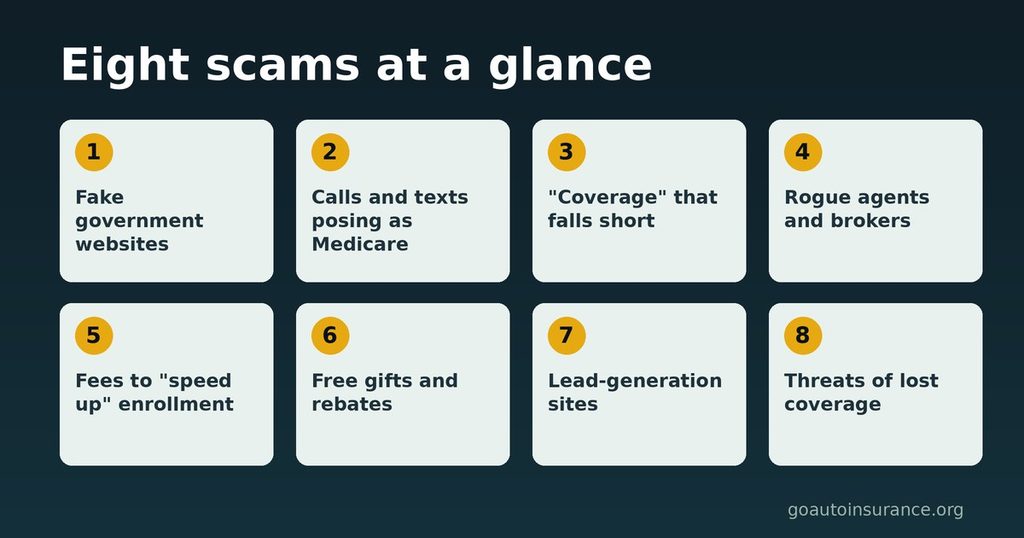
1. Fake websites that look official
In a September 2026 consumer alert, the FTC warned about misleading search results and websites that imitate government health care sites. A lookalike site may ask for “a quick eligibility check” or offer a personalized quote, and then collect your personal details or push you toward a sales call.
What to do: type healthcare.gov or medicare.gov directly into your browser, or use the official link from a trusted source. Be careful with search ads, which can appear above the real site.
2. Calls, texts and emails pretending to be Medicare, HealthCare.gov or your insurer
The Better Business Bureau (BBB) says that Medicare and the ACA marketplace will not call you unexpectedly or demand payment for enrollment help. The Illinois Attorney General adds that the Centers for Medicare & Medicaid Services (CMS) does not employ Medicare sales representatives and generally sends its communications in writing. Caller ID is easy to fake, so the name on your screen proves nothing.
The FTC’s October 29 warning also highlighted illegal prerecorded telemarketing calls that promote health insurance. An unsolicited recorded sales call is a red flag.
What to do: hang up. If you want to check something, call the number on your insurance card or the official site, which you look up yourself.
3. “Coverage” that isn’t what it seems
The FTC has also warned about misleading health insurance ads, where you could end up paying for coverage that falls short when you need it. These can include limited-benefit products or discount programs that are not true health insurance. The FTC says it sent warning letters to 25 companies about their advertising but that the letters did not accuse any of them of wrongdoing. It is a reminder that the agency is watching the market.
What to do: ask for the plan’s full documents and check what it covers, what it excludes, and whether it is a real ACA or Medicare plan. Compare it on the official marketplace.
4. Rogue agents and brokers
Most agents and brokers are legitimate, and the Illinois Attorney General notes that legitimate agents do sell Medigap, Part D and Medicare Advantage plans. But some bad actors take advantage. Examples include encouraging you to overstate your income so you qualify for bigger subsidies, which is fraudulent and can leave you owing money at tax time, and enrolling or switching you without your clear consent. A Florida news report described customers being moved into 2027 plans without knowing.
What to do: check the person’s license with your state insurance department, never agree to misstate your income, and log in to your own account afterward to confirm your plan and your information.
5. Fees to “process” or “speed up” enrollment
The BBB lists requests for payment to process or expedite enrollment as a warning sign. Enrolling through HealthCare.gov or Medicare does not cost extra, and free help is available from official sources.
6. “Free” gifts, rebates and rewards
The National Council on Aging lists promises of free items or services as the first of five warning signs of a Medicare scam. New York’s Attorney General also notes that the state marketplace will not offer rewards to renew your coverage.
7. Lead-generation websites
The New York Attorney General warns that submitting your contact information to some websites can lead to calls, texts or emails from scammers or aggressive sellers. A “free quote” form may be how your phone number ends up on a list.
8. Threats that you’ll lose coverage
The Illinois Attorney General describes a scam in which a bogus “Medicare agent” claims your coverage will end unless you act now. Scammers use fear because a frightened person acts fast.
[Optional but recommended: add a short paragraph from your own experience, such as a suspicious call or message you or someone you know received, in your own words. Only include things that are true.]
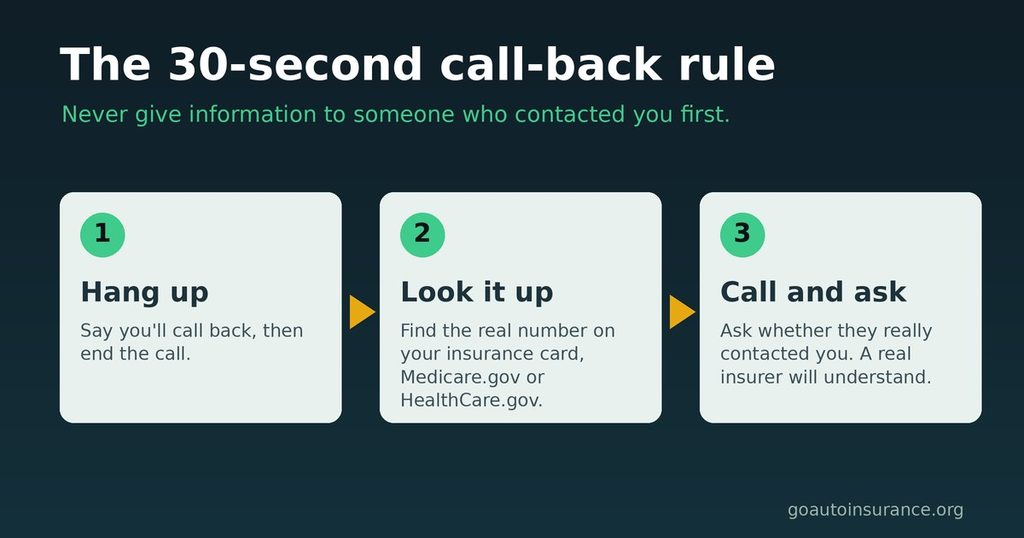
The 15-second call-back rule
Here is a simple habit that beats nearly every scam: never give information to someone who contacted you first. Instead:
- Say you will call back, and hang up.
- Look up the real number yourself, on your insurance card, on Medicare.gov, or on HealthCare.gov.
- Call that number and ask whether they contacted you.
A real insurer or agency will understand. A scammer will push you to stay on the line.
You can also Practice this 30 seconds rule
Red flags checklist
Be suspicious if someone:
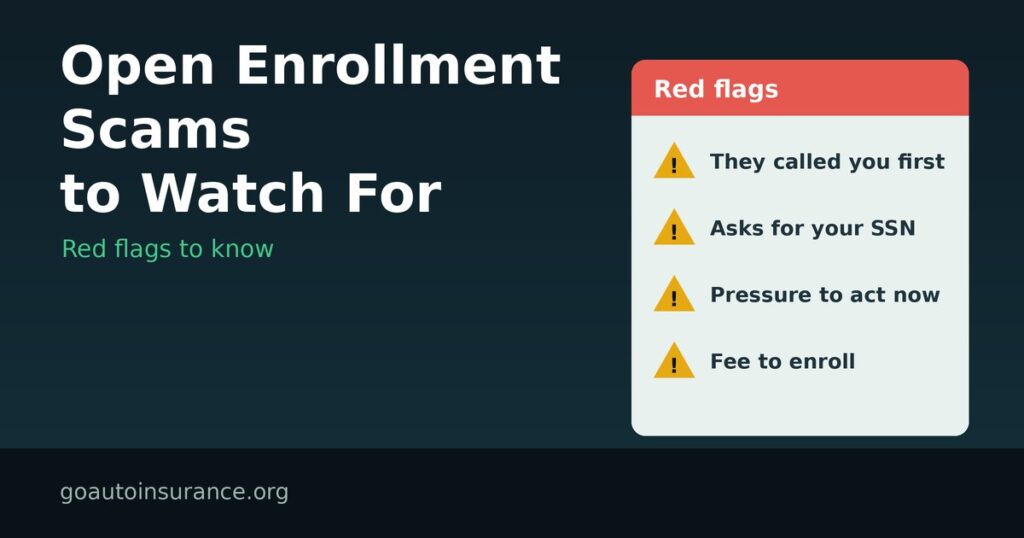
- Contacted you first and asks for personal or financial information
- Asks for your Medicare number, Social Security number or bank details
- Says you must act today or lose coverage
- Asks for a fee to enroll or to “expedite” your application
- Promises free gifts, cash back or rewards
- Claims to be “Medicare” or “Obamacare” and sells plans by phone
- Wants you to misstate your income
- Pressures you to keep them on the line or not tell anyone
How to enroll safely
- Use official sites only. For the ACA marketplace, use HealthCare.gov or your state’s marketplace. For Medicare, use Medicare.gov. Type the address yourself.
- Get free, unbiased help. Marketplace navigators and State Health Insurance Assistance Programs (SHIPs) offer free counseling.
- Verify any agent. Check their license with your state insurance department, and be wary of anyone who cold-called or knocked on your door.
- Read before you sign. Look at the plan summary, and never sign a blank form.
- Check your account afterward. Log in to confirm which plan you are enrolled in and that your details are correct.
- Keep records. Save confirmation numbers, plan documents and notes about calls.
- Review statements. Check your Medicare Summary Notice and insurer statements for services you did not receive.
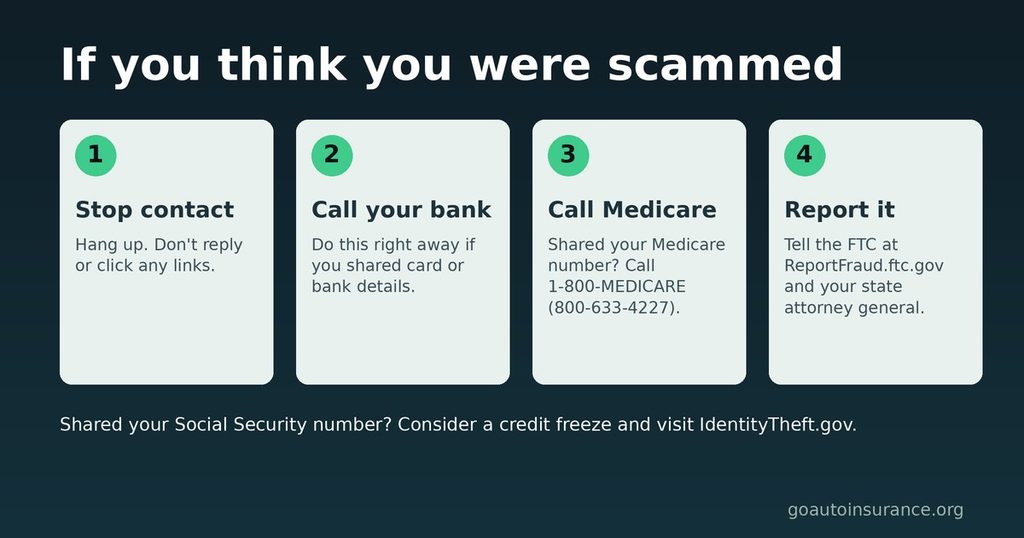
What to do if you think you were scammed
- Stop contact. Hang up, don’t reply, and don’t click links.
- If you gave out bank or card details, call your bank or card issuer right away and ask them to block or monitor the account.
- If you shared your Social Security number, consider a credit freeze and visit the FTC’s IdentityTheft.gov for a recovery plan.
- If you shared your Medicare number, call 1-800-MEDICARE (800-633-4227) and watch your Medicare Summary Notices for services you did not receive.
- If you paid, contact your bank or card company quickly, since some payments can be disputed.
- Report it. Tell the FTC at ReportFraud.ftc.gov and your state attorney general. If the scam involves Medicare, report it at Medicare.gov or 800-633-4227, as the FTC advises.
- Tell someone you trust. Scammers often target older adults and rely on shame to keep victims quiet.
Practice This:
Common mistakes to avoid
- Trusting caller ID. It can be faked.
- Clicking the first search result without checking. Ads and lookalike sites can appear on top.
- Giving your Medicare number to “verify” you. Treat it like a bank account number.
- Assuming a friendly voice means a legitimate offer.
- Waiting to report. Quick action limits the damage.
Frequently asked questions
Will Medicare ever call me? In limited cases, such as your own plan calling you or someone returning a call you made, but Medicare does not make unexpected sales calls. If in doubt, hang up and call 1-800-MEDICARE yourself.
Are all insurance agents scammers? No. Licensed agents and brokers can help you compare plans. The red flags are unsolicited contact, pressure, fees for enrollment, and requests to misstate information.
Is it safe to fill out an online quote form? Be cautious. Some forms collect your details and pass them to sellers who may call or text repeatedly. Use official sites or a licensed agent you chose.
What if I already enrolled through a scammer? Contact the official marketplace or Medicare to verify your coverage, report it, and check your account. Quick action can protect your coverage and your identity.
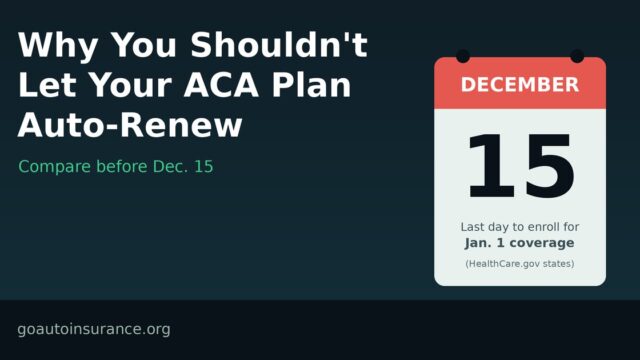
Do the deadlines scammers mention matter? Verify them on the official site. Medicare open enrollment runs October 15 to December 7. For the ACA marketplace on HealthCare.gov, December 15 is the deadline for coverage starting January 1, and enrollment continues through January 15 for later coverage, though state marketplaces can differ.
Sources and further reading
- FTC, What to know ahead of Open Enrollment to avoid health insurance scams (September 28, 2026): https://consumer.ftc.gov/consumer-alerts/2026/09/what-know-ahead-open-enrollment-avoid-health-insurance-scams
- Fox News (CyberGuy), Health insurance scams to watch for during open enrollment: https://www.foxnews.com/tech/health-insurance-scams-watch-during-open-enrollment
- CBS News, Health care shoppers, beware of scams: https://www.cbsnews.com/news/open-enrollment-means-open-season-for-scams-ftc-warns
- WAFB, Open enrollment brings robocalls, scams targeting health care plan seekers: https://www.wafb.com/2026/11/10/open-enrollment-brings-robocalls-scams-targeting-health-care-plan-seekers/
- Better Business Bureau via AOL, How to avoid scams during Medicare, ACA open enrollment: https://www.aol.com/articles/avoid-scams-during-medicare-aca-160026339.html
- WMTV, BBB warns of Medicare scams as open enrollment begins: https://www.wmtv15news.com/2026/10/12/bbb-warns-medicare-scams-open-enrollment-begins/
- Illinois Attorney General, Medicare open enrollment alert: https://illinoisattorneygeneral.gov/Page-Attachments/MedicareOpenEnrollementScam.pdf
- New York Attorney General, consumer alert on health insurance scams: https://ag.ny.gov/index%2ephp/press-release/2025/attorney-general-james-and-department-health-commissioner-dr-mcdonald-issue
- AARP, Four tips on how to defend against scammers during marketplace open enrollment: https://www.aarp.org/health/healthcare/aca-enrollment-scams/
- AOL, Open enrollment is a scammer’s paradise: https://www.aol.com/articles/open-enrollment-scammers-paradise-protect-100500205.html
- WPTV, Some Florida ACA customers are being auto-enrolled in new 2027 health plans without their knowledge: https://www.wptv.com/news/state/navigating-aca-enrollment-tips-and-a-warning
- Official resources: HealthCare.gov, Medicare.gov, ReportFraud.ftc.gov, IdentityTheft.gov, and your state attorney general and insurance department.
Scam tactics and deadlines change, and rules differ by state. Some sources are news outlets, consumer groups and advocacy organizations. Check official sites for current information.
This article is general information, not insurance, legal or financial advice. Policies, prices and rules vary by insurer and location, so confirm details with your insurer or a licensed agent. See our editorial policy.