Home-Hardening Discounts: How a Stronger Home Can Lower Your Insurance Bill
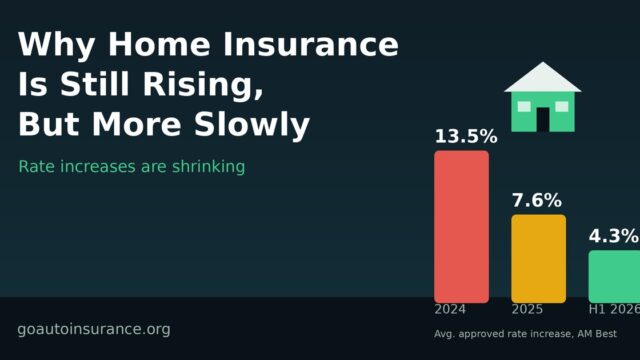
With the increasing home insurance prices and some insurers pulling back from storm and wildfire areas, a large number of homeowners are asking a practical question: if I make my house tougher, will my insurer charge me less? Sometimes, yes. A stronger roof, better window protection or a fire-safe yard can earn a discount, and in some states insurers are required to offer one. But the savings are not automatic, they vary widely, and they do not always cover the cost of the work. This guide explains how home-hardening discounts work, which programs exist, how to claim them, and how to decide if an upgrade is worth it.
Points to note
- “Home hardening” means strengthening a house against specific hazards such as high winds, hail or wildfire.
- Several states now require insurers to offer discounts for certain upgrades, and others have grants or tax incentives. Rules differ a lot by state.
- Discounts usually apply only to the part of your premium that covers the hazard (for example wind or wildfire), not your whole bill.
- Savings can be meaningful, but they may take years to repay a big project. Ask your insurer before you spend money.
- Upgrades can also help you stay insurable, because insurers increasingly look at roof condition and risk.
Definition: Home hardening?
Home hardening is making a home more resistant to damage from a particular hazard. The right upgrades depend on where you live.
- Wind and hurricanes: a roof that is attached more securely, sealed roof decks that keep water out if shingles blow off, stronger garage doors, and protection for windows and doors.
- Hail: impact-resistant roofing materials. Insurers in some hail-prone states, such as Oklahoma, offer wind and hail discounts for homes with a certain FORTIFIED designation, according to the National Conference of Insurance Guaranty Funds (NCIGF).
- Wildfire: fire-rated roofing, ember-resistant vents, a cleared zone right around the house, and well-kept defensible space.
The key idea is that mitigation is specific to the hazard. A roof upgrade that helps in a hurricane is not necessarily the one that helps in a wildfire.
Check Why insurers give discounts
Insurers reward upgrades when evidence shows they reduce losses. The Insurance Institute for Business & Home Safety (IBHS), a research group funded by the insurance industry, created the FORTIFIED program, and it says homes built to its standards have measurably smaller claims on average. As a result, many insurers voluntarily offer incentives such as wind premium discounts for FORTIFIED homes, and some states require them by law or regulation.
There is research behind the push. A University of Alabama study commissioned by the Alabama Department of Insurance estimated insurers would have saved $105.6 million in losses if every home in Hurricane Sally’s 2020 path in Gulf Shores had met the FORTIFIED Roof standard. And a study by the California Department of Insurance and the NAIC found that rebuilding Los Angeles-area homes to the IBHS Wildfire Prepared Home standard could reduce projected wildfire losses by about one-third on average.
The major programs
Availability depends on your state, so treat this as a map of what exists, not a promise of what you can get.
FORTIFIED (wind, hurricane and hail)
FORTIFIED is a tiered system from IBHS. A FORTIFIED Roof focuses on how the roof is attached, the roof deck, the edges and keeping rain out, and higher levels add protection for the rest of the home. A trained evaluator inspects the work and issues the designation.
- Alabama has the longest-running program, with more than 53,000 designations, according to Insurance Business. The state requires insurers to offer wind-coverage discounts, which Stateline reports range from about 20% to 60% depending on the level of upgrade.
- Louisiana will require insurers to offer FORTIFIED discounts no later than January 1, 2027, with amounts that depend on location and designation level, according to the Louisiana Department of Insurance. The state’s Legislative Auditor found average premium savings of about 22% after homeowners installed a FORTIFIED roof, and Louisiana has also offered grants of up to $10,000 for roofs.
- Kentucky enacted mandatory premium discounts for FORTIFIED homes under legislation effective March 2026.
- Other states, including North Carolina, South Carolina, Georgia, Mississippi and Oklahoma, have FORTIFIED-based programs, grants, tax incentives or insurer discounts. Connecticut regulators are promoting FORTIFIED roofs, but the state has not yet created similar incentives, according to Insurance Business.
Wind mitigation credits in Florida
Florida law requires insurers to offer discounts for qualifying wind-resistant features, which are documented on a state inspection form. Insurance Journal reported in July 2026 that Florida property insurers offer discounts of as much as 44% for some steps, such as protecting windows and doors. The state’s My Safe Florida Home program offers grants for mitigation work.
Wildfire discounts in California
California’s Safer from Wildfires framework, in place since 2022, requires insurers to recognize and reward homeowners and businesses that take wildfire mitigation steps. Eligible actions include a Class A fire-rated roof, ember-resistant vents, a five-foot ember-resistant zone around the home and compliance with defensible space rules. The regulation does not set the size of the discount, only that insurers must offer some reduction, and an analysis by Insurance for Good found wide variation between companies. Research from Resources for the Future also found big differences in how insurers apply the discounts.
IBHS Wildfire Prepared Home
This voluntary designation looks at roof protection, building features and defensible space. Several large California insurers have committed to writing policies for homes with one of its designations.
Grants and tax incentives
Some states help pay for the work. South Carolina’s Safe Home program offered grants of up to $7,500 without matching funds, or $6,000 in matching grants, as of early 2025, and the state also offers an income tax credit for retrofitting. Louisiana, Alabama and others have run similar programs. Funding often runs out and rules change, so check the current status with your state insurance department.
[Optional but recommended: add a short paragraph from your own experience, such as an upgrade you or someone you know made and what the insurer did, in your own words. Only include things that are true.]
Are the discounts worth it?
This is the question that matters most, and the honest answer is: it depends.
- Discounts often apply only to part of your premium. In states with FORTIFIED discounts, they are applied to the wind or hail portion, not the whole bill.
- Amounts vary widely. Reported ranges run from about 19% to 35% from one large insurer in Louisiana to as much as 60% in Alabama’s mandated ranges, depending on the level of work.
- Studies suggest discounts may not fully repay the cost. A July 2026 Insurance Journal report on research into wind mitigation said discounts alone may not be enough to encourage upgrades, and pointed to grants as a helpful tool.
Here is a simple illustration (not data from a real policy). Suppose the wind and hail part of your premium is $1,500 a year, and a roof upgrade earns a 30% discount. That saves $450 a year. If the upgrade costs $10,000, it would take about 22 years to repay through the discount alone. If a grant pays $5,000, the same savings repay the remaining cost in about 11 years. Your numbers will be different, so ask your insurer for the exact discount before deciding.
The discount is also only one benefit. A stronger roof or a cleared yard can reduce the chance you suffer a loss in the first place, and insurers that look at roof condition may be more willing to keep covering you. If your roof is already near the end of its life, the discount can be a bonus on a replacement you were going to do anyway.
Step by step method of how to get a discount
1. Ask your insurer first
Before you spend anything, ask which upgrades the company credits, how large the discount is, and what proof they need. Not every insurer credits every feature, and discounts vary by company and location.
2. Check your state’s rules and programs
Visit your state Department of Insurance website to see whether discounts are mandated, whether a grant or tax credit exists, and how to apply. In Louisiana, for example, the discount is applied after an approved surveyor completes a wind mitigation survey, according to the state.
3. Get an inspection or evaluation
In Florida, a licensed inspector completes the state’s wind mitigation form. For FORTIFIED, an IBHS-trained evaluator verifies the work. Keep the report, because that is what you submit.
4. Prioritize upgrades
Start with the biggest risks for your area. In many storm areas, that is the roof. In wildfire areas, it is the roof, vents and the zone around the house. Ask a contractor and your insurer which changes matter most.
5. Look for grants and tax credits before you start
Some programs require approval before work begins and do not reimburse work already done. Applying afterward could cost you the money.
6. Use licensed contractors and keep records
Get written estimates, confirm the contractor is licensed and insured, and keep invoices, photos and certificates.
7. Send the proof to your insurer and confirm the discount
Ask for the new premium in writing and check that the discount shows on your next bill. Some states require insurers to recognize upgrades individually, which can make smaller improvements count, according to the American Bar Association.
8. Shop around afterward
Insurers credit upgrades differently, so after you have the paperwork, compare quotes from several companies. Include smaller and regional insurers and an independent agent.
Common mistakes to avoid
- Starting work before checking with your insurer. You could pay for something that earns little or no discount.
- Assuming the discount applies to your whole premium. It usually applies to one portion.
- Trusting a contractor’s promise of a guaranteed discount. Only your insurer can tell you what it will credit.
- Skipping the paperwork. Without an inspection or certificate, you may not get credit.
- Forgetting maintenance. A hardened roof or defensible space still needs upkeep to count.
- Falling for post-storm scams. Be careful with door-to-door contractors who push quick deals after a storm.
Frequently asked questions
Will a new roof lower my premium? Often, but not always. A newer roof can reduce risk and may earn a discount, especially if it meets a recognized standard. Ask your insurer before you replace it.
Do I have to be in a storm or wildfire zone to get these discounts? Most mandated programs are in specific states. Elsewhere, insurers may still give credits for features like newer roofs or protective devices. Ask your agent.
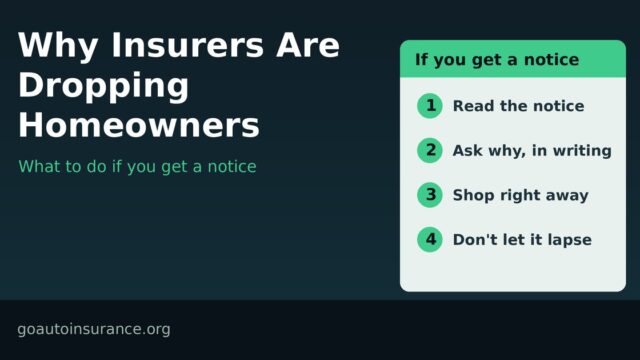
Can hardening help me avoid being dropped? It may help, because insurers look at roof condition and risk, but nothing guarantees renewal. If you receive a nonrenewal notice, see our guide on what to do.
Are grants available everywhere? No. Programs are mainly in certain states, funding is limited, and rules change. Check your state’s Department of Insurance.
Is home hardening the same as flood protection? No. Wind and wildfire upgrades do not stop rising water. Flood needs its own protection and, usually, separate insurance.
Sources and further reading
- IBHS, What is FORTIFIED?: https://ibhs.org/?p=11160418
- IBHS, where FORTIFIED grant programs are offered: https://ibhs.org/?p=11161496
- Stateline, A red state pioneers paying for roof upgrades as storms boost insurance costs (Alabama): https://stateline.org/?p=13209
- InsuranceNewsNet, State insurance commissioner is focusing on discounts for fortified roofs (Louisiana and Alabama): https://insurancenewsnet.com/oarticle/state-insurance-commissioner-is-focusing-insurance-discounts-for-fortified-roofs
- Insurance Business, Connecticut regulators promote FORTIFIED roofing standards: https://www.insurancebusinessmag.com/us/news/breaking-news/connecticut-regulators-promote-fortified-roofing-standards-to-boost-storm-resilience-582855.aspx
- WAFB, Louisiana homeowners could qualify for hurricane insurance discounts (Louisiana Department of Insurance): https://www.wafb.com/2026/09/24/louisiana-homeowners-could-qualify-up-49-hurricane-insurance-discount/?outputType=amp
- Claims Journal, Premiums will skyrocket by 2035, and discounts not enough for wind mitigation, studies say (July 2026): https://www.claimsjournal.com/news/national/2026/07/09/338693.htm
- Claims Journal, More Southeast states pushing funding and discounts for stronger roofs: https://amp.claimsjournal.com/news/national/2025/01/10/328352.htm
- Environmental Law Institute, States lean into FORTIFIED housing incentives: https://www.eli.org/environmental-forum-column/states-lean-fortified-housing-incentives-insurers-curtail-coverage
- NCIGF, Strengthening Homes, Strengthening Communities: https://readiness.ncigf.org/?p=1629
- California Department of Insurance, Safer from Wildfires: https://www.insurance.ca.gov/01-consumers/200-wrr/safer-from-wildfires.cfm
- Insurance for Good (CA FWD), The role of insurance in funding and financing resilience (Aug 2026): https://cafwd.org/wp-content/uploads/2026/08/CA-FWD_Insurance-for-Good_The-Role-of-Insurance-in-Funding-and-Financing-Resilience_August-2026.pdf
- Resources for the Future, From risk to reward: insurance discounts for wildfire mitigation: https://www.rff.org/publications/working-papers/from-risk-to-reward-insurance-discounts-for-wildfire-mitigation/
- InsuranceNewsNet, Study on rebuilding Los Angeles to wildfire safety standards: https://insurancenewsnet.com/oarticle/landmark-study-shows-rebuilding-los-angeles-to-wildfire-safety-standards-could-slash-future-fire-losses-2
- American Bar Association, Incentives for natural catastrophe resiliency (2026): https://www.americanbar.org/groups/tort_trial_insurance_practice/resources/brief/2026-summer/us-international-developments-incentives-natural-catastrophe-resiliency
- Your state’s Department of Insurance, and your own insurer.
Program details, grant amounts and discount percentages change often and differ by state and insurer. Some sources are advocacy groups, insurers or trade publications. Check current information with your state and insurer before you spend money.
This article is general information, not insurance, legal or financial advice. Policies, prices and rules vary by insurer and location, so confirm details with your insurer or a licensed agent. See our editorial policy.