Why Car Insurance Is Increasing Again in 2026 (and What You Can Do About It)
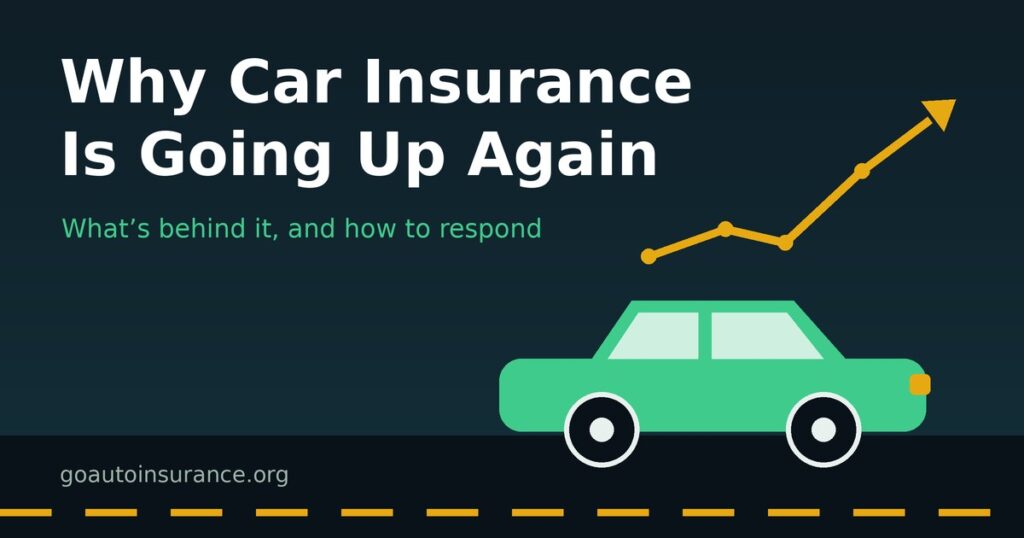
If you notice a higher price in your most recent renewal notice even though nothing changed on your end, you are not imagining it. After a rare dip in 2025, car insurance prices have started climbing again in much of the United States. This guide explains what is pushing premiums up, why a clean driving record does not fully protect you, and the practical steps that can bring your bill back down.
The short version
- Average prices fell in 2025, but they have started rising again in 2026, in roughly half the country.
- The main drivers are higher repair costs, tariffs on cars and parts, severe weather, and more serious crashes.
- Much of the increase is about the whole insurance market, not about you personally.
- You can still save money by comparing quotes, asking for discounts, and reviewing your coverage at every renewal.
What really happened to prices
For a few years, premiums rose sharply. Then in 2025 something unusual happened: the average price of full-coverage car insurance dropped, by about 6% according to the insurance marketplace Insurify, with drivers in 39 states seeing lower averages.
That relief is fading. Insurify’s mid-year report found the national average for full coverage was about $2,237 a year in the first half of 2026, up roughly 1% since the end of 2025. More telling is how widespread the change is. In the first half of 2026, 27 states saw prices go up, compared with only nine states in the second half of 2025. The company projects increases in 32 states by the end of the year, and an average of around $2,242.
A 1% national average sounds small, and it hides a lot of variety. Some states are moving the other way. Insurify reported drops in Washington, D.C., New Mexico, New Jersey, New York and Massachusetts in the first half of the year. Others are climbing: Connecticut has seen increases of around 10% this year, and Kentucky and West Virginia are projected to rise about 8% over the year.
A separate survey of 1,510 drivers by CarInsurance.com found that nearly two-thirds had seen their rates increase over the past 12 months. The most common experience was a rise of 5% to 10%.
To put that in everyday terms (this is an illustration, not a quote): on a policy that costs $2,000 a year, a 5% to 10% rise means roughly $100 to $200 more.
Why premiums are Increasing
Insurers set prices by estimating how much they will pay out in claims, plus the costs of running the business. When those expected costs go up, premiums follow. Several things are pushing costs up at the same time.
1. Cars are more expensive to repair
Modern vehicles are packed with sensors, cameras and driver-assistance technology. A bumper that used to be a simple piece of plastic may now hold radar units and need recalibration after a repair. Parts and skilled labor cost more, so the average repair bill after a crash is higher. Insurify cites rising repair costs as one of the main reasons rates are moving up again.
2. Tariffs on vehicles and parts
When the price of imported cars and replacement parts goes up, so does the cost of fixing or replacing a damaged vehicle. Industry commentators, including Insurify’s CEO in recent interviews, have pointed to tariffs as one of the pressures behind this year’s increases. Exactly how much of the rise comes from tariffs is hard to measure, so treat it as one contributing factor, not the whole story.
3. Severe weather
Hail, floods, hurricanes and wildfires all lead to large numbers of claims at once, especially on the comprehensive part of a policy. When insurers pay out more in a region, prices there tend to rise. That is one reason two drivers with identical records can see very different changes depending on where they live.
4. More serious crashes
Even if the total number of accidents holds steady, crashes that cause more injury or more vehicle damage cost much more to settle. Insurers also pay for medical care and legal costs, which have their own inflation.
5. Where you live
Location is a major pricing factor. Local traffic, repair costs, theft rates, weather and state rules all matter. In mid-2026, Insurify found drivers in Washington, D.C., paying about $3,880 a year for full coverage, while drivers in New Hampshire paid about $1,019. That is nearly a four-to-one gap for the same type of coverage.
Why a clean record doesn’t fully protect you
This is the part that frustrates people most. As Insurify’s CEO put it in a recent interview, prices are affected by broader data trends that have nothing to do with the individual customer. If repair costs, claims and weather losses rise across your area, insurers raise prices for most drivers there, including careful ones.
Your personal record still matters. Insurers look at things like your driving history, claims, vehicle, mileage, where you park, and in most states your credit history. Insurify notes that drivers with better credit have, on average, been less likely to file claims, which is why many insurers use it. A few states limit or ban the practice, so check the rules where you live.
What you can do about it
You cannot control tariffs or hailstorms, but you can control how you shop and what you buy. These steps are listed from the easiest to the most involved.
1. Read your renewal notice carefully
Before you do anything else, find out why the price changed. Compare the new notice with last year’s. Check that the coverage limits, deductibles, listed drivers, vehicles, mileage and address are all correct. A small mistake, such as a driver who has moved out or a car you no longer own, can cost you real money.
2. Shop around at every renewal
Insurers weigh risk differently, so the same driver can get very different quotes. Request at least three quotes, using exactly the same coverage limits and deductibles, so you are comparing like with like. Include a mix of large national insurers, smaller or regional companies, and an independent agent who can quote several at once. Remember that the cheapest policy is not always the best one, so look at claims service and exclusions too.
3. Ask for every discount you may qualify for
Common discounts include safe driver, low mileage, good student, bundling home and auto, paying in full, going paperless, anti-theft devices, and completing an approved defensive driving course (where offered). The CarInsurance.com survey found that these kinds of discount programs save about 10% to 15% on average, though your results will vary. Insurers do not always apply them automatically, so ask.
4. Consider a higher deductible, carefully
A higher deductible lowers your premium because you take on more of the cost of a small claim. Only do this if you could comfortably pay that amount in cash tomorrow. Saving $150 a year is not worth it if a $1,000 repair bill would put you in debt.
5. Review whether you still need every coverage
If you drive an older car worth only a modest amount, compare the yearly cost of collision and comprehensive coverage with what the car is worth and what you would realistically be paid after a total loss. Be cautious about reducing liability coverage, which protects you if you hurt someone or damage their property, because a serious accident can cost far more than a state minimum policy pays. Also note that if you finance or lease your vehicle, your lender will generally require full coverage.
6. Think about usage-based or telematics programs
These programs track driving habits such as braking, speed, time of day and sometimes phone use, through an app or a device, and can reward careful or low-mileage drivers with lower prices. Savings vary widely by insurer and driver. Before enrolling, read what data is collected, how long it is kept, who it is shared with, and whether bad driving data can raise your price at renewal.
7. Protect your record and your credit
Avoid claims you can easily pay for yourself, keep speeding tickets off your record, and pay bills on time. These habits help in the long run, and they are the parts of your price you control most directly.
8. Don’t let your coverage lapse
In most states, driving without insurance is illegal, and a gap in coverage can make future quotes more expensive. If money is tight, call your insurer and ask about options before you cancel, and compare lower-cost choices rather than going uninsured.
Common errors to avoid
- Switching without comparing the same coverage. A cheaper quote may simply have lower limits or a higher deductible.
- Dropping liability coverage to save a few dollars. The savings are small compared with the risk.
- Assuming loyalty is rewarded. Many insurers offer their best prices to new customers, so staying put can cost more.
- Not telling your insurer about changes. Moving, changing jobs or driving fewer miles can all affect your price, sometimes in your favor.
What to expect next
Forecasts suggest 2026 is a year of normalization after a rare price drop, with higher repair costs and claims keeping pressure on premiums. Prices can change by state and by insurer, and no forecast is guaranteed. The most reliable defense is to treat your policy like any other big recurring bill: review it each year, compare options, and ask questions.
Frequently asked questions
Why did my car insurance go up if I have no accidents or tickets? Because insurers price based on market-wide costs and local risks as well as your own record. Higher repair costs, severe weather and bigger claims in your area can raise prices for everyone nearby.
How often should I compare car insurance quotes? At least once a year, around your renewal date, and any time something major changes, such as moving, buying a new car, or adding a driver.
Will shopping around hurt my credit? Getting insurance quotes normally uses a soft credit check, which does not affect your credit score. Confirm this with each insurer if you are unsure.
Is it worth switching insurers just to save a small amount? Only if the coverage is truly equal and the company has a good claims reputation. A small saving is not worth poor service when you need to make a claim.
Sources and further reading
- Insurify, 2026 Mid-Year Car Insurance Report: https://insurify.com/car-insurance/report/
- Insurify, Average Car Insurance Rates as of November 2026: https://insurify.com/car-insurance/news/average-car-insurance-rates-november-2026
- CarInsurance.com, 2026 consumer survey on rising rates: https://www.carinsurance.com/trends-and-insight/car-insurance-cost-crisis-explained/
- Scripps News, Car insurance rates climbing again, reversing last year’s drop (August 2026): https://www.scrippsnews.com/dont-waste-your-money/car-insurance-rates-climbing-again-reversing-last-years-drop
- Your state’s Department of Insurance, and the National Association of Insurance Commissioners (naic.org), for rules and consumer guides in your state.
Figures above come from industry reports by an insurance marketplace and a consumer survey, and they are averages that may not match what you are offered. Check current numbers for your state before relying on them.
This article is general information, not insurance, legal or financial advice. Policies, prices and rules vary by insurer and location, so confirm details with your insurer or a licensed agent. See our editorial policy.